My #1 Longevity Drug: Sleep
Hi friend,
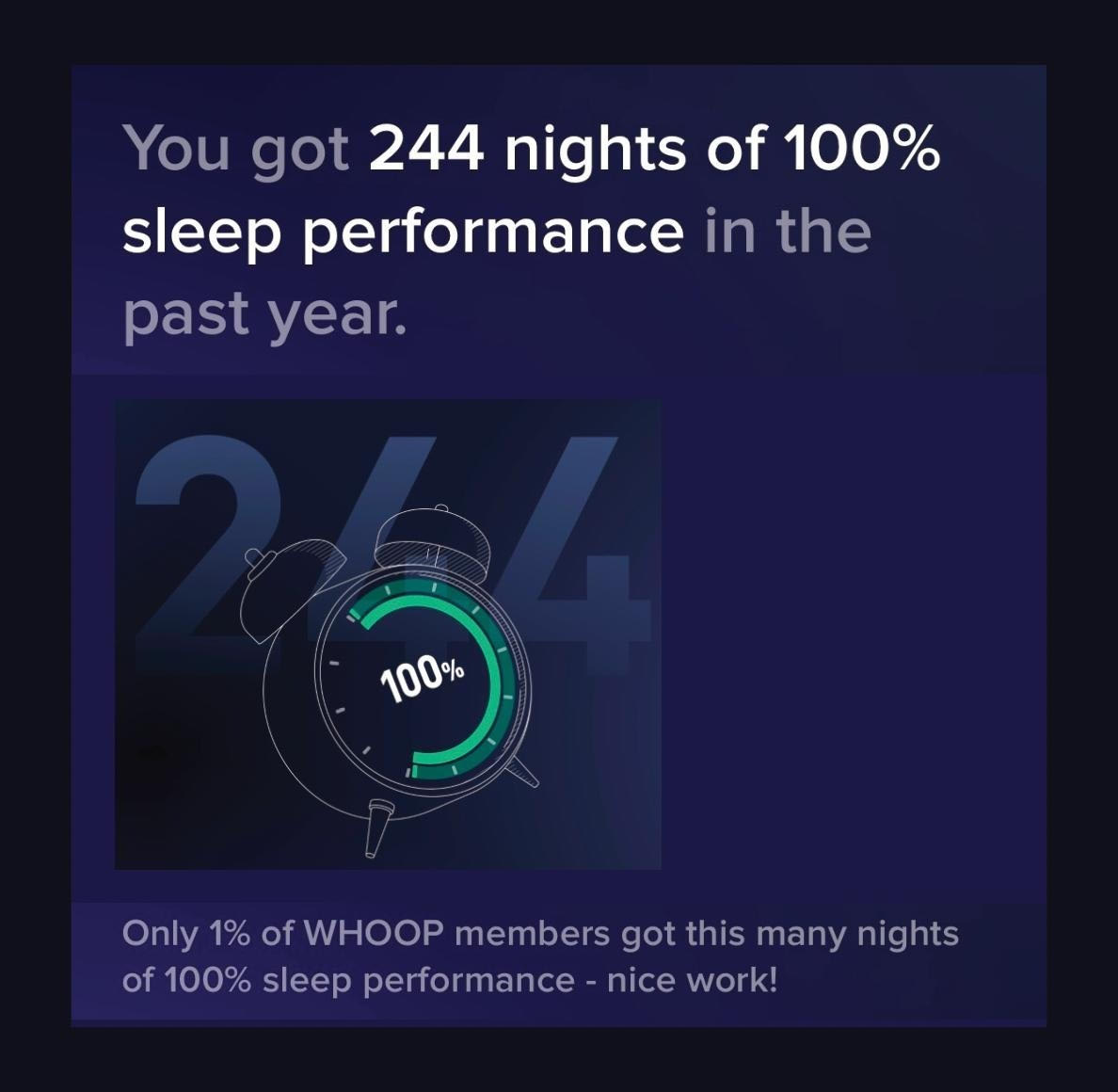
I got 8 months of perfect sleep. (Receipts below).
That might sound out of reach for you… but it's not. After years of struggling with sleep, I figured out how to reliably get high-quality rest.
Sleep will make you a top performer. It:
- rejuvenates the body
- boosts brain function
- supports the immune system
- regulates hormones
Consistent, quality sleep is the foundation of well-being and longevity.
On the other hand, sleep deprivation is disastrous. It:
- reduces cognitive functions
- slows reflexes
- increases poor decision-making
- is linked to heart disease, diabetes, obesity, anxiety, and depression
Being constantly awake for ~18 hours is equivalent to having a blood alcohol content of ~0.05%. Stay up for 24 hours, and that rises to 0.1%... that's over the legal limit to drive in the U.S. (0.08%).
If you only do one thing for your health: sleep.
Here's how:
1. Reframe your identity: you are a professional sleeper
- Make sleep your #1 priority.
- Plan your day around sleep. It's the most important appointment in your calendar.
- Ignore those who say sleep is for the weak… they're drunk from sleep deprivation.
2. Keep a consistent bedtime
- Choose a bedtime that allows for 7–9 hours in bed each night.
- Go to bed ±30 min of this bedtime. Even on weekends.
- Set an alarm for winding down if you need to.
3. Create a 60-min wind-down routine
Set a specific time each evening to start winding down. Turn off screens.
Do this:
- read a book
- take a bath
- meditate or do breathwork
- journal
- listen to relaxing music
- hang out with family
4. Eat early
- Have your last meal of the day at least 2 hours before bed to give your body time to digest before sleep.
- Experiment with eating your final meal 4–6 hours before bed.
- Minimize foods that negatively impact sleep. Like me, you may find that certain foods, such as pasta and bread, reduce sleep quality.
- When socializing late, choose light options like steamed veggies.
5. Avoid stimulants before bed
- Avoid caffeine, alcohol, and other stimulants at least 10 hours before sleep.
- Caffeine has a half-life of 6 hours in the blood. That means consuming a cup of coffee 6 hours before bed is the same as drinking half a cup immediately before bed.
- Opt for herbal teas or other relaxing drinks in the evening.
6. Regulate evening light
- Dim the lights 1–2 hours before bed to create a relaxed atmosphere.
- Use warm lighting in the evening.
- Install blue light filters on your devices (e.g., f.lux) and consider blue light-blocking glasses.
- Limit screen time at least 1 hour before bed and blackout your bedroom.
7. Stay cool
- Keep your bedroom temperature between 60–67°F (15–19°C).
- Choose breathable bedding and light sleepwear.
- Use fans or cooling devices, and consider taking a warm bath before bed.
- Ventilate your room and/or use a temperature-controlled mattress, if possible.
8. Create a peaceful sleep environment
- Ensure your bedroom is quiet, dark, and cool.
- Invest in a comfortable mattress and pillows.
- Remove distractions and keep your bedroom clean and clutter-free.
- Consider using a noise machine to offset environmental sounds or earplugs if necessary.
9. Get morning light
- Get light in your eyes within the first 15–30 min of waking to help anchor your circadian rhythm (body clock) and boost mood.
- If you wake up before the sun like me, you can get the light from a 10,000 lux device.
10. Gather data
- Track your sleep habits and patterns with a journal or sleep tracker.
- Experiment with bedtimes, routines, and room temps, and find what works.
- Continuously monitor and tweak your habits to optimize your sleep quality.
You can start building these habits with this checklist. Print out or download here.
High-quality sleep changed my life… but it took a few months of following these habits to get consistently good sleep. Stick with it.
──
Be well, Bryan
Originally published in Bryan Johnson's Blueprint newsletter (February 12, 2026). This content is for informational purposes only and is not medical advice. Consult your healthcare provider before starting any new wellness protocol.