Monday Has a 24% Higher Heart Attack Risk — Here's How to Prepare
Hi friend,
There might be 24% more heart attacks on Monday.
That's how much a single hour change in sleep schedule can impact health.
There are a few things you can do this week to prepare for Daylight Saving Time (DST).
Why DST hits so hard
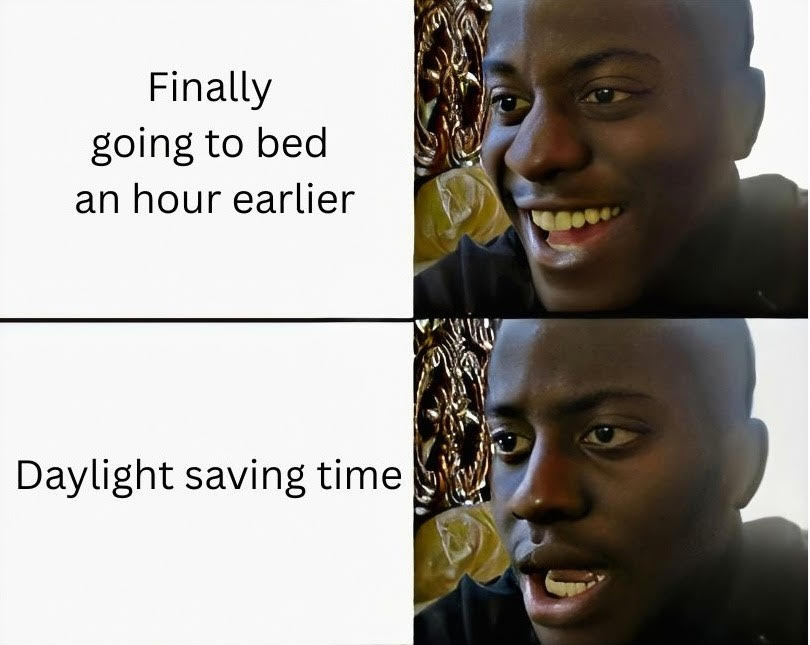
Unless you go to bed an hour earlier on Saturday, you will likely lose an hour of sleep. Not good. Getting consistent, high-quality sleep (7–9 hr a night) is the #1 thing you can do for longevity.
That's not the only problem. You're also going to experience an hour of circadian disruption.
Switching to DST is linked to:
- lower sleep quality
- slower reaction times
- higher heart rate and blood pressure
- a short-term increase in inflammatory markers
- altered immune system
- poorer mood
This can lead to...
- worse productivity at work
- more hospitalizations from stroke (+8% in some studies)
- more fatal traffic accidents (+6%)
- more heart attacks (one study found +24% more on Monday)
- more workplace injuries (and more severe injuries)
- slightly higher suicide rates in vulnerable people
This isn't just for 1 day.
Research suggests you might struggle with sleep for 5–7 days after the time change.
The good news is you can start preparing now to minimize the negative effects.
──
How to prepare for DST
Before the change to DST:
- Prioritize sleep this week: DST can feel worse if you're sleep-deprived. Prioritize sleep even more than usual before the time change. Aim for 7–9 hours.
- Gradually adjust sleep times: In the 2–3 days leading up to DST, slowly shift your sleep-wake times 15–20 min earlier each day. You're trying to avoid making the 1-hour jump all at once.
- Gradually adjust meal times: Eating is a "timing cue," helping to regulate your circadian rhythm. Slowly shift meal times 15–20 min earlier each day 2–3 days before DST.
After the change to DST:
- Get early morning sunlight: Get light in your eyes 15–30 min after waking to set your circadian rhythm and increase alertness. You should do this every morning, but especially on Sunday when the clocks and daylight have shifted.
- Be careful when driving: For up to 7 days after the change to DST, be extra careful when doing activities that need high alertness.
Follow these habits at all times for the best sleep:
- avoid caffeine at least 10 hours before bedtime
- dim the lights 1–2 hours before bed and use blue light-blocking glasses
- limit screens at least 1 hour before bed
- keep your bedroom at 60–67°F (15–19°C)
If you do one thing, use DST as a reminder of how important regular, high-quality sleep is.
Your heart will thank you.
──
Be well, Blueprint
Most emails suck. We're trying not to.
Originally published in Bryan Johnson's Blueprint newsletter (March 4, 2026). This content is for informational purposes only and is not medical advice. Consult your healthcare provider before starting any new wellness protocol.