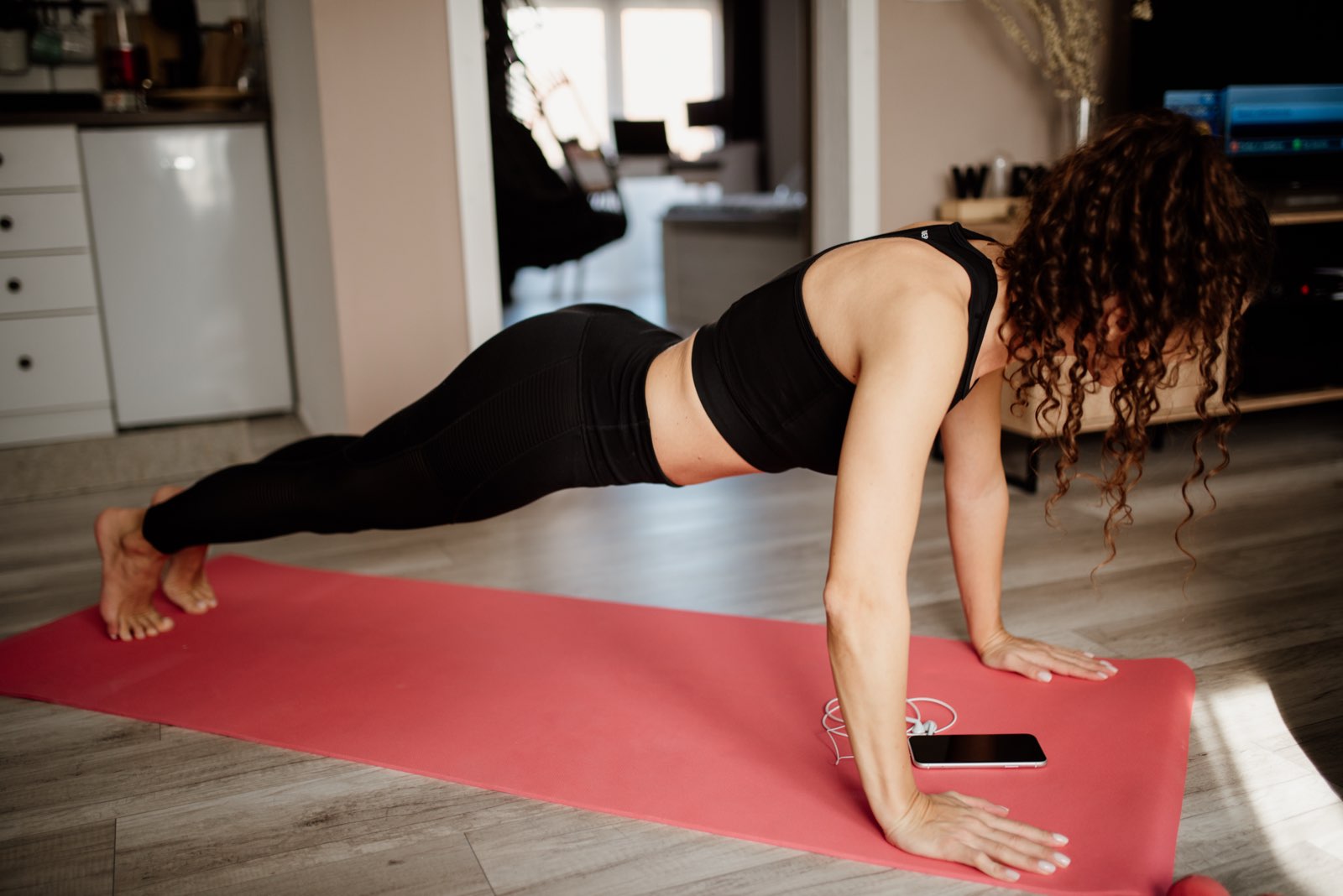
How to Build a Strong Core & Better-Looking Abs
Most people train their abs with endless crunches, planks, and high-rep "burn" work. In this episode, I explain why the right approach depends on what you actually want your core to do—and how to train it for look, feel, or performance.
Start With the Goal
Your abs and your core overlap, but they are not the same thing.
- Your abs include the rectus abdominis (the six-pack muscles), internal and external obliques, and transverse abdominis.
- Your core includes those muscles plus the pelvic floor, diaphragm, spinal erectors, deep spinal muscles, hips, glutes, rib cage, and other structures that stabilize your trunk.
- The rectus abdominis helps control your rib cage. The obliques rotate and laterally flex your trunk. The transverse abdominis acts like a weight belt, pulling the abdomen inward.
The core's main job is often not to create movement, but to resist unwanted movement so you can transfer force through your arms and legs. That is why a complete program should cover both movement and anti-movement:
- Flexion and anti-flexion
- Lateral flexion and anti-lateral flexion
- Extension and anti-extension
- Rotation and anti-rotation
There is no universally "best" core exercise. The best choice depends on your goal, your ability to create a hard contraction, and whether you can execute the movement safely.
Look: Build Bigger, More Visible Abs
Visible abs are primarily a body-composition story—your abs are made in the kitchen as much as the gym. For more on that, see my episode on metabolism and sustainable fat loss.
But larger abdominal muscles can also be easier to see, so train them with the same fundamental hypertrophy principles you use for other muscles:
- Train each abdominal muscle group 2–4 times per week.
- Accumulate roughly 10–20 working sets per muscle per week.
- Finish most sets with only 1–2 repetitions in reserve.
- Use any rest interval that lets you perform well—anything from 30 seconds to 3+ minutes can support growth.
- Apply progressive overload. Do not rely only on adding time or repetitions; add resistance when technique allows.
I recommend a roughly 50/50 split between:
- Large, integrated exercises such as squats, deadlifts, overhead presses, sled work, and loaded carries.
- Direct core exercises such as weighted cable crunches, reverse crunches, leg raises, ab-wheel rollouts, Pallof presses, and side planks.
Prioritize the rectus abdominis and obliques, but do not ignore the transverse abdominis. Dead bugs, stir-the-pot variations, and other anti-movement exercises can improve your ability to pull the abdomen inward. Posture also matters: an exaggerated anterior pelvic tilt and flared rib cage can make the stomach appear more distended without any change in body fat.
Feel: Improve Control and Support Back Health
If your priority is reducing feelings of weakness, imbalance, or back irritation, use more controlled, isolated work. The goal is to restore activation and movement quality without loading the spine heavily.
- Perform roughly 75–80% isolated core work and 20–25% integrated exercises.
- Train 3–7 days per week because the loads are lower and frequent practice helps groove the movement pattern.
- Use up to roughly 30 working sets per muscle per week.
- Exercises such as bird dogs, dead bugs, planks, side planks, and controlled back extensions can be taken close to fatigue without requiring heavy external load.
- Emphasize anti-movement exercises. Research comparing anti-movement and dynamic core training found that both can improve trunk neuromuscular function, with anti-movement work offering an effective option for stability.
Technique is the progression gate. For flexion exercises, I like the cue of curling up and down one vertebra at a time. If your position changes, the set is over—even if the target muscle could keep going.
Perform: Transfer More Force
For athletic performance, the goal is not necessarily to make the rectus abdominis bigger. It is to make the entire core strong enough to resist unwanted movement and transfer force. The research on direct sport transfer is still limited, but a meta-analysis of core training and athletic performance supports using core work as part of a broader performance program.
- Train the core 3–5 days per week.
- Complete roughly 6–15 working sets per muscle group per week.
- Finish most sets with 1–2 repetitions in reserve, usually closer to 1.
- Rest about 1–2+ minutes between hard sets so fatigue does not limit force production.
- Use roughly 75% integrated exercises and 25% direct core work.
Cover at least one exercise from each category every week: flexion, rotation, anti-extension, and anti-rotation or anti-lateral flexion. Squats, deadlifts, carries, sled pushes, and overhead presses often demand more from the core than light isolation work because they allow much greater force production.
Progress From Control to Load
I use a five-step progression before asking the core to move fast or handle heavy resistance:
- Isometric control under fatigue: Hold the correct position in a plank or side plank for roughly 45–90 seconds.
- Anti-movement or eccentric control under fatigue: Use dead bugs, reverse crunches, or slow lateral lowering while maintaining position.
- Anti-movement or eccentric control under load: Add resistance and reduce repetitions, but keep perfect technique.
- Concentric movement under fatigue: Progress to active movement such as higher-repetition cable crunches.
- Concentric movement under load: Perform the same movement heavily for roughly 5–8 reps.
You may stay at one step for six days or six months. Progress only when you can own the position.
For a simple heavy session, choose 2–3 working sets of 6–12 reps from three categories:
- A loaded dead bug or ab wheel for anti-extension.
- A heavy suitcase carry for anti-rotation and anti-lateral flexion.
- A heavy cable crunch for flexion.
Finally, put your highest priority first. Train the core early if it is the main goal. If pre-fatiguing it would reduce your squat, pull-up, lunge, or other priority movement, train it afterward.
Remember: in the words of Bill Bowerman, "If you have a body, you are an athlete."
-Andy
──
This newsletter is sponsored by Momentous
Momentous recently introduced Signature Spec™ Creatine — their highest quality creatine to date, with 10x fewer impurities and 2-5 times stricter heavy metal limits than other premium creatines. All backed by 6-stages of testing & certification. Not to mention, the ultrafine micronized powder makes for seamless mixing into your favorite drink or shake.
Try it yourself and get up to 35% off your first order with code GALPIN.
Originally published in Dr. Andy Galpin's Perform Podcast newsletter (July 28, 2026). This content is for informational purposes only and is not medical advice. Consult your healthcare provider before starting any new wellness protocol.