The 5 Worst Exercises for People Over 40 (AVOID)
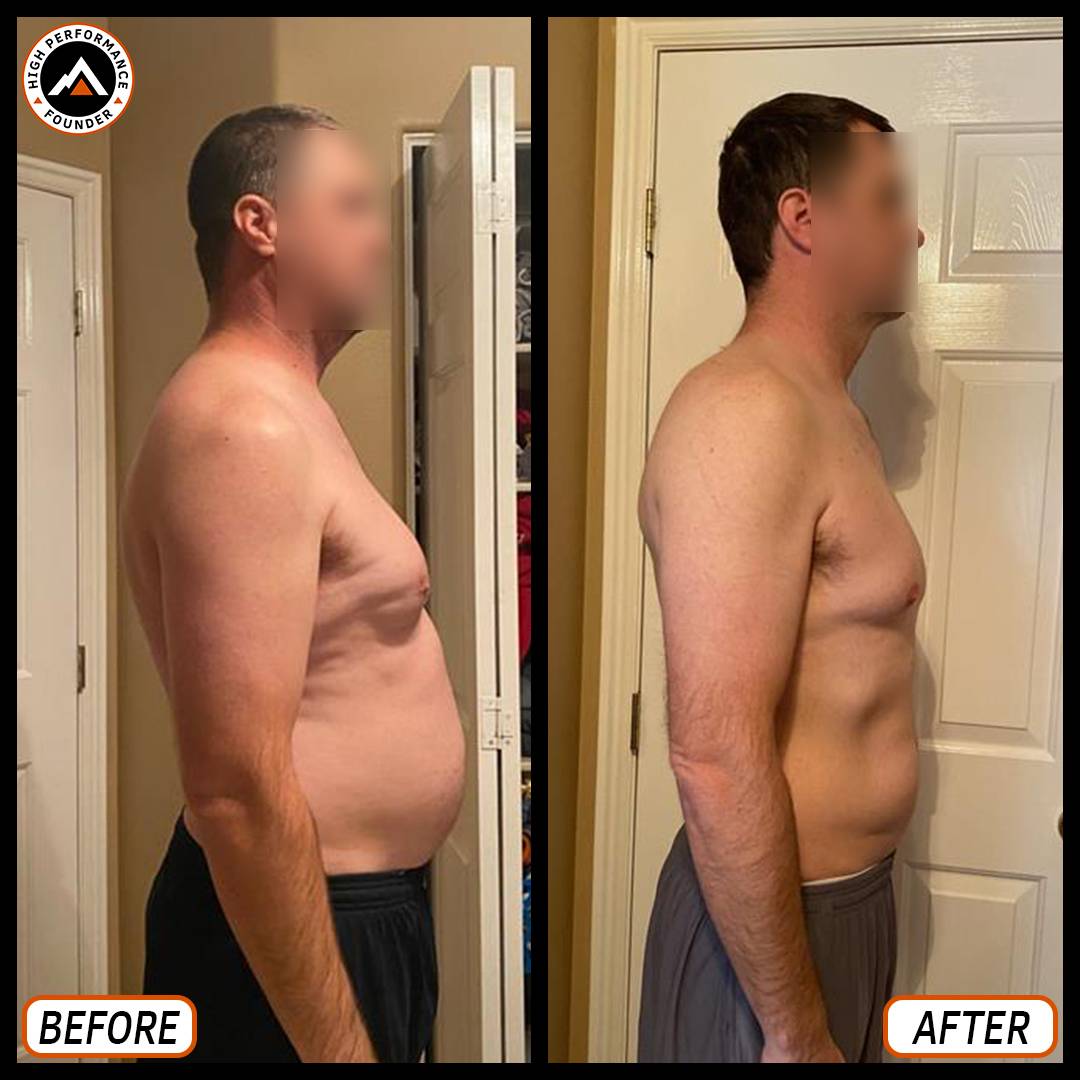
I had a client — a 53-year-old CEO — who trained five days a week, ten miles each run, and had been doing it for years.
He was lean. And he was broken.
Constant knee aches. Low testosterone. A back that locked up every couple of months. He looked more gaunt than fit. And no matter how hard he pushed, his energy at work was deteriorating.
I asked him to drop the miles. Switch to zone 1 training three times a week with weights. Add occasional sprints.
Within six months, he gained 7 pounds of lean mass and his testosterone went up 25%.
The problem wasn't his effort. It was the exercise selection.
After 40, the game changes. Recovery slows. Risk goes up. Injury prevention comes before chasing numbers, because recovering from injury takes longer than recovering from a workout.
Over my career working with thousands of entrepreneurs and executives, I've found that there are 5 popular exercises that most people over 40 do wrong — and they're quietly destroying your knees, shoulders, and spine while making recovery harder with every workout.
Here they are, along with what to do instead.
A Note Before We Begin
An exercise is only as good as its risk vs. reward ratio.
Movement patterns, bone length, and joint stress differ by body structure. What's safe for one person can destroy another. The question is always: does the benefit of this exercise outweigh the potential for harm?
After 40, the answer to that question shifts. And for these 5 exercises, the math no longer adds up.
#1 Worst Exercise Over 40: Heavy Back Squats
The back squat is one of the most technically demanding exercises in the gym. It's an advanced exercise disguised as a simple one.
Heavy axial loading — a barbell resting on your upper back — puts massive compression on your spine and knees. Getting this right requires a level of mobility, breathing mechanics, and bar positioning that most people just don't have.
And most people lack the hip mobility to hit depth properly. So they compensate. They lean forward. They shift the stress to their lower back. They push their knees inward.
Each rep is a small insult to the joint. Stack hundreds of sessions of those small insults over years, and you end up with chronic knee pain and a compressed lumbar spine.
The swap: Bulgarian split squats. They're brutal, but they build balanced leg strength, challenge the core, and are far kinder to your lower back because the load is held at your sides instead of sitting on your spine. Add goblet squats for pattern practice. Both give you leg development without the spinal compression.
#2 Worst Exercise Over 40: Heavy Bench Press
A client of mine — a bodybuilding competitor — felt a tweak in his shoulder after his third heavy bench press session in a week. He ignored it. A month later, he couldn't raise his arm above his head without pain.
The barbell bench press locks your hands and shoulders into a fixed position. There's no natural rotation. This can pinch the rotator cuff and irritate the AC joint, especially in people who've spent decades sitting at a desk — which shifts the shoulder joint forward and internally rotates the arm.
It's another advanced exercise people treat as beginner-friendly.
The swap: Machine pressing and dumbbell pressing. Machines give you stability so you can focus on pressing with power. Dumbbells let your shoulders move naturally through the range — you can rotate your grip from neutral to pronated, which reduces impingement risk. Both options get you chest gains with less shoulder damage.
#3 Worst Exercise Over 40: Burpees
Burpees are the ultimate "look at me suffer" exercise.
In theory, they combine a squat, a plank, a push-up, and a jump. In practice, most people turn them into a half push-up, a sloppy jump, and repeated spinal stress. Quantity gets prioritized over quality, and speed turns bad mechanics into injury mechanics.
If you have wrist, shoulder, or back issues, burpees will magnify them. Every drop to the floor rounds your spine. Every push-up from that position adds load to an already compromised position.
Burpees add money to physiotherapists' bank accounts.
The swap: Sled pushes. They light up your entire body safely — cardio, legs, core — and are nearly impossible to do with bad form. No sled? Break the components apart. Do a set of squats, then push-ups, then jump squats. You'll get the same metabolic effect without a single trip to the chiropractor.
#4 Worst Exercise Over 40: Heavy Conventional Deadlifts
The conventional deadlift is one of the best exercises humans can do — when your mobility allows for it.
The problem is that most people over 40 are tight in their hamstrings and hips. The deep hinge required in the conventional pull puts your lumbar disc under significant shear force. When your hamstrings can't lengthen enough to keep your back flat, you round your lower back to reach the bar.
A rounded lower back under a heavy load is how discs get herniated.
The older you get, the harder it is to recover from heavy conventional pulls. And the margin for error shrinks.
The swap: Trap bar deadlifts. The neutral grip and elevated handles shift the loading pattern closer to a squat, dramatically reducing spinal stress while keeping the full-body benefit. Hip thrusts are another excellent option — they isolate the glutes and hamstrings without putting any strain on your lower back. Between these two, you get all the posterior chain development with a fraction of the injury risk.
#5 Worst Exercise Over 40: Long-Distance Running
Back to the CEO I mentioned at the start.
Long-distance running feels productive. It burns calories, it builds endurance, and there's a meditative quality to it. But when you're pounding pavement for hours every week, you're accumulating repetitive stress on your knees, hips, and ankles that compounds over time.
Worse, excessive long-distance running spikes cortisol. Chronically elevated cortisol accelerates muscle breakdown, suppresses testosterone, and increases belly fat. My client was lean but hormonally wrecked — that's what years of high-mileage running had done to him.
The cardiovascular benefits of long-distance running can be achieved with far less volume and far less joint stress.
The swap: Zone 2 cardio at lower mileage — walking, cycling, or light jogging at a pace where you can hold a conversation. Add two to three strength training sessions per week. Replace one long run per week with sprint intervals: 6 to 10 rounds of 20–30 second hard efforts with full recovery in between. This combination builds cardiovascular capacity, preserves muscle, and keeps cortisol in check.
──
Training Smarter After 40
None of this means you have to train less.
It means you have to train smarter.
The goal is to keep your body functioning at a high level for as long as possible — not to prove something in the gym, not to chase numbers from your 20s, and not to suffer your way through exercises that cost more than they give back.
Every rep you do should make you more capable, not less.
Swap the five exercises above for their alternatives and you'll find something surprising: you'll get stronger, recover faster, and feel better with every passing year instead of worse.
That's the game after 40.
Onward and upward. 🚀
- Dan
P.S. We've got a few spots open in our Lean Body Mastery coaching group.
If you're an entrepreneur or executive who's been training hard but not getting results — or worse, accumulating injuries — this is for you.
We build a plan around your schedule, your travel, and your body. Not a template. A system.
Disclaimer: This email is provided for educational and informational purposes only and does not constitute providing medical advice or professional services. The information provided should not be used for diagnosing or treating a health problem or disease, and those seeking personal medical advice should consult with a licensed physician.
Originally published in Dan Go's High Performance Founder newsletter (August 19, 2025). This content is for informational purposes only and is not medical advice. Consult your healthcare provider before starting any new wellness protocol.